

How stablecoin-based settlement infrastructure is giving rise to Payment Finance—a short-duration, receivables-backed credit category now accessible to global institutional investors
Investors are not funding tokens or speculative assets. They are purchasing notes issued by a bankruptcy-remote SPV, backed by short-duration receivables from licensed payment institutions. This is not DeFi yield farming; it carries no correlation to cryptocurrency markets. Each return is generated by a real payment between regulated financial institutions.
RWA Tokenisation and the Rise of Payment Finance
Real-world asset (RWA) tokenisation represents rights to financial or physical assets on a blockchain. Payment Finance — PayFi — is the most structurally coherent use case within this category. The underlying asset is money, stable by design and settled on-chain; the asset and settlement infrastructure are aligned within the same system. The features institutional investors expect from RWA tokenisation — on-chain traceability, structured receivables, currency stability — are inherent to the PayFi model by design. And PayFi goes further: every disbursement and repayment is recorded on-chain in real time, enabling continuous reconciliation and dynamic borrowing base calculation — live collateral visibility that no traditional fund structure can match.
A Structural Gap, Not a Technology Gap
The cross-border payments industry moves $156 trillion per year. Settlement cycles often extend beyond same-day, and an estimated $4 trillion in working capital is frozen in prefunded accounts at any given moment. Banks can provide fiat credit lines, but their capital requirements are incompatible with the daily liquidity cycles payment companies require. The result is a structural pricing disadvantage: bank funding carries embedded capital costs that inflate borrowing rates for payment institutions. PayFi platforms address this with short-term fixed and on-demand credit lines, denominated in USD-backed stablecoins, to licensed payment institutions. Underlying loans carry a duration of one to seven days; the investor facility rolls on a revolving basis up to approximately 90 days. Disbursements and repayments can be independently verified via on-chain data and third-party analytics tools — and with positions cycling daily, the facility adapts more readily to market cycles and redemption spikes than traditional credit funds.
Why Cross Border Payments Need a New Capital Model
The comparison to trade finance is instructive: short-duration, receivables-backed, high-turnover credit—with compressed cycles and on-chain settlement replacing documentary verification.
For institutional allocators, PayFi presents five measurable characteristics. Duration: underlying loans average one to seven days, insulating portfolios from interest rate sensitivity. Yield: leading platforms have generated up to 10% APR, reflecting the premium paid to capital serving a gap banks and credit funds cannot efficiently address; this depends on underwriting quality, corridor performance, and execution — it is not risk-free. Credit underwriting is based on transaction-level data, payment history, and real-time operational flows. Collateral: exposure is structured through a bankruptcy-remote SPV against receivables from licensed payment institutions. Transparency: activity can be independently verified via on-chain data. Correlation: payment volume tracks global commerce, not equity or credit markets.
Regulatory and Structural Readiness
Stablecoin adoption is accelerating across financial institutions within a maturing regulatory environment. The US GENIUS Act (July 2025) formally recognises payment stablecoins. In Switzerland, the VQF Self-Regulating Organisation supervises licensed financial intermediaries within FINMA’s broader oversight architecture — not as banks or deposit-taking institutions. The EU’s MiCA extends coverage across member states. Regulated SPV structures and independent monthly reporting are now available to institutional participants.
Key Risks Investors Should Assess
While SPV segregation and licensed-institution counterparties provide meaningful protections, investors should assess these risks. Counterparty: borrowers depend on payment volumes and corridor concentration. Operational: settlement flows carry execution dependency. Jurisdiction: performance varies by geography. Structural: the model depends on the SPV servicing arrangement and underwriting discipline. Capital recycling: returns are sensitive to volume contraction or extended repayment cycles. The comparison to trade finance holds — similar risk taxonomy, compressed cycles, broader geographic scope.
An Emerging Category at an Inflection Point
The structures are familiar — SPV notes backed by receivables-backed exposure, with independent monthly reporting. What is genuinely new is the category: a short-duration, high-turnover credit asset backed by the daily flow of global commerce, accessible through regulated Swiss infrastructure.
Categories like this do not stay early for long. The regulatory footing is in place. The track record is verifiable. Global family offices, alternative lenders, and institutional allocators are positioned by mandate to engage before mainstream capital arrives. Of the $4 trillion in frozen working capital, the addressable opportunity for non-bank PayFi platforms remains largely uncaptured — the early-mover terms available today will not persist once the category is fully discovered. The window is open; it will not remain so indefinitely.
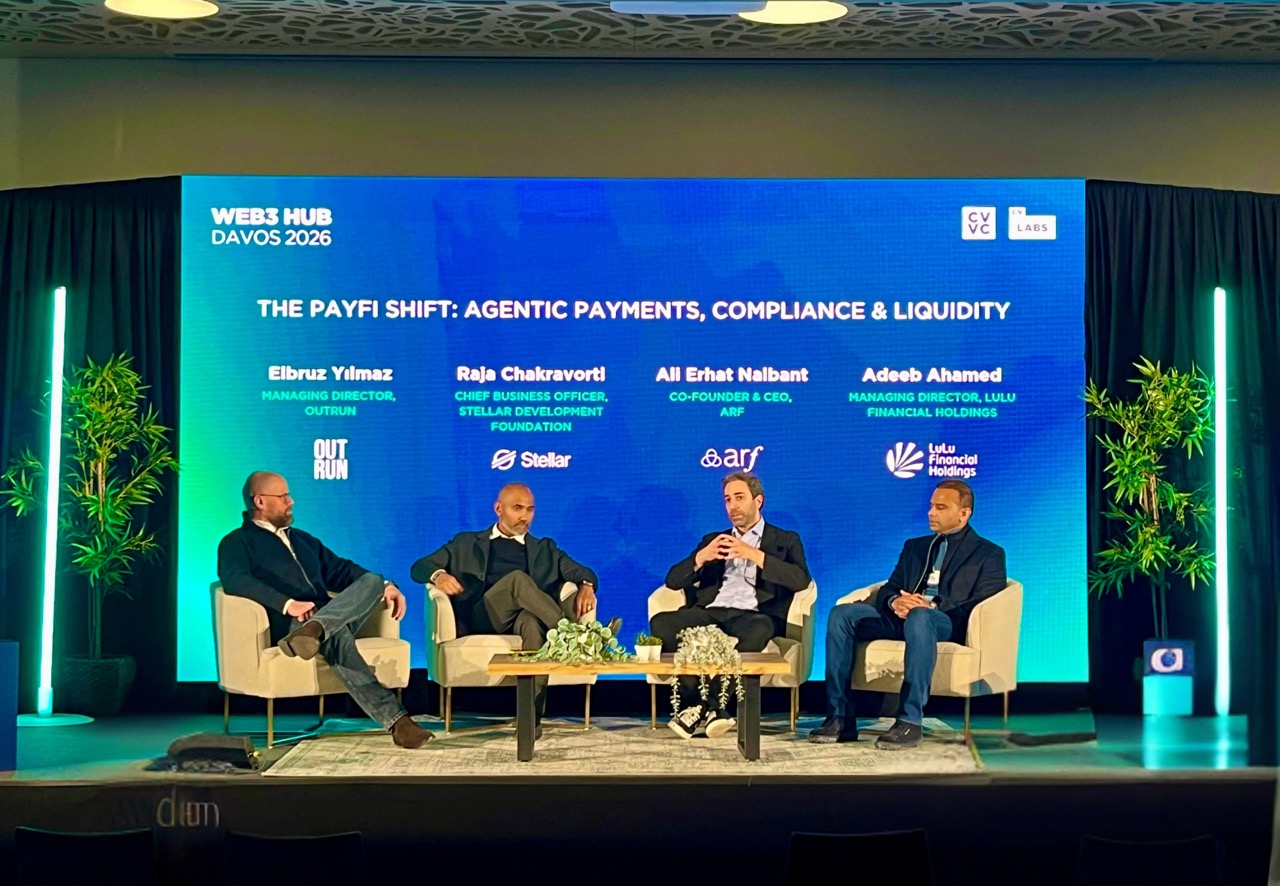
Ali Erhat Nalbant Co-Founder & CEO, Arf Financial GmbH, Zug, Switzerland